
April Recap: Everyone’s Ready for AI. Except Your Data.
Reflections from data summits, industry shifts, and broken academia.

Welcome to my Data Analytics Journal, where I write about data science and analytics. This month, paid subscribers learned about:
Why Most Benchmarks Are Misleading - and What to Use Instead - Which benchmarks to trust, where to find them, and how to use them.
How To Develop Analytical Intuition - Error-spotting methods and how to cross-check metrics when the data doesn’t align. Sampling and ways to work with ranges to quickly spot patterns, validate assumptions, or catch errors on the fly.
The Ultimate Guide to A/B testing | Ronny Kohavi (Airbnb, Microsoft, Amazon) - A must-listen talks on experimentation with Ronny Kohavi. This introduction to experimentation covers common challenges and misconceptions in A/B testing.
Last month was busy. Every week brought a new data event or conference, and even more are lined up for May and June. It feels like the data space is bursting with energy and growing interest from all sides. Everyone seems to have an opinion - and a platform to share it. It’s an exciting time, but it’s also becoming way harder to find and connect with true data experts whose insights are grounded in real-world experience and actual completed projects rather than lead generation or tool promotion.
Academia needs to change
Here’s the uncomfortable theme I noticed across multiple events: academia does not meet the expectations and demands of the industry. People who recently graduated, completed a bootcamp, have no idea what tools, skills, or problems they’re supposedly “qualified” to handle on the job.
For example, they might be proficient in SQL, but they don’t understand the differences between databases and data warehouses, and have no concept of a data lake, semantic layer, or data model.. How can I hire an analyst who doesn’t know the difference between a view and a materialized view?
I’ve met several recent graduates who have been job-hunting for over a year for data engineering roles, claiming advanced SQL and Python skills - yet they have no experience spinning up an instance, installing a database, or working with data without a GUI. It seems many people entering the data field don’t have the foundational concepts, and we’re expected to teach them on the job. Apparently, no school is offering hands-on supervised practice on data modeling.
Every week, someone asks me whether a Master’s in Data Science is worth it, or which data analytics bootcamp or certification I’d recommend. Many of these programs are expensive. I am all for building a strong foundation and earning a degree, but after interviewing and speaking with hundreds of recent graduates, I haven’t come across a program I can endorse.
Today, the industry’s expectations for analytics professionals are very different from just 5-7 years ago. Back then, knowing SQL, Python, and statistics was enough to break into the field. Now, you must be a Snowflake expert, a Databricks expert, a semantic layer expert, a dbt expert, or know the Stripe API inside out. If you want to be a product analyst, you need to be fluent in Mixpanel or Amplitude, understand event data, and be comfortable with feature flagging and experimentation. To enter marketing analytics, you need to know mobile app stores and ad networks like the back of your hand. And none of this is taught in academia.
Annual Tableau 2025
As expected, Tableau's theme this year was “groundbreaking data and AI innovations”. They introduced Agentforce, and kicked off the Agentic era with Nextgen analytics and Tableau Next.
For an average Tableau developer, I don’t think any of this is good news. However, for Salesforce users, it probably is. Tableau is now positioned more as a Salesforce extension, integrating all data sources into one giant semantic layer within their cloud.
My readers know I don’t like Tableau and consider it harmful to fast-growing analytics teams. However, Tableau still does two things better than any other modern BI tool:
Academic reach: Nearly every student knows and uses Tableau for their classroom projects, graduation works, or personal portfolios. Tableau has partnerships with many institutions, supporting students with programs and coaching. Very few people entering analytics know of open source BI tooling or have experience with Looker.
Focus on the community: Tableau runs the Iron Viz contest, Ambassador programs, DataFam Tip battles, community awards, Dashboard Showcases featuring strong visualizations, and more. That builds long-term engagement that many newer tools lack.
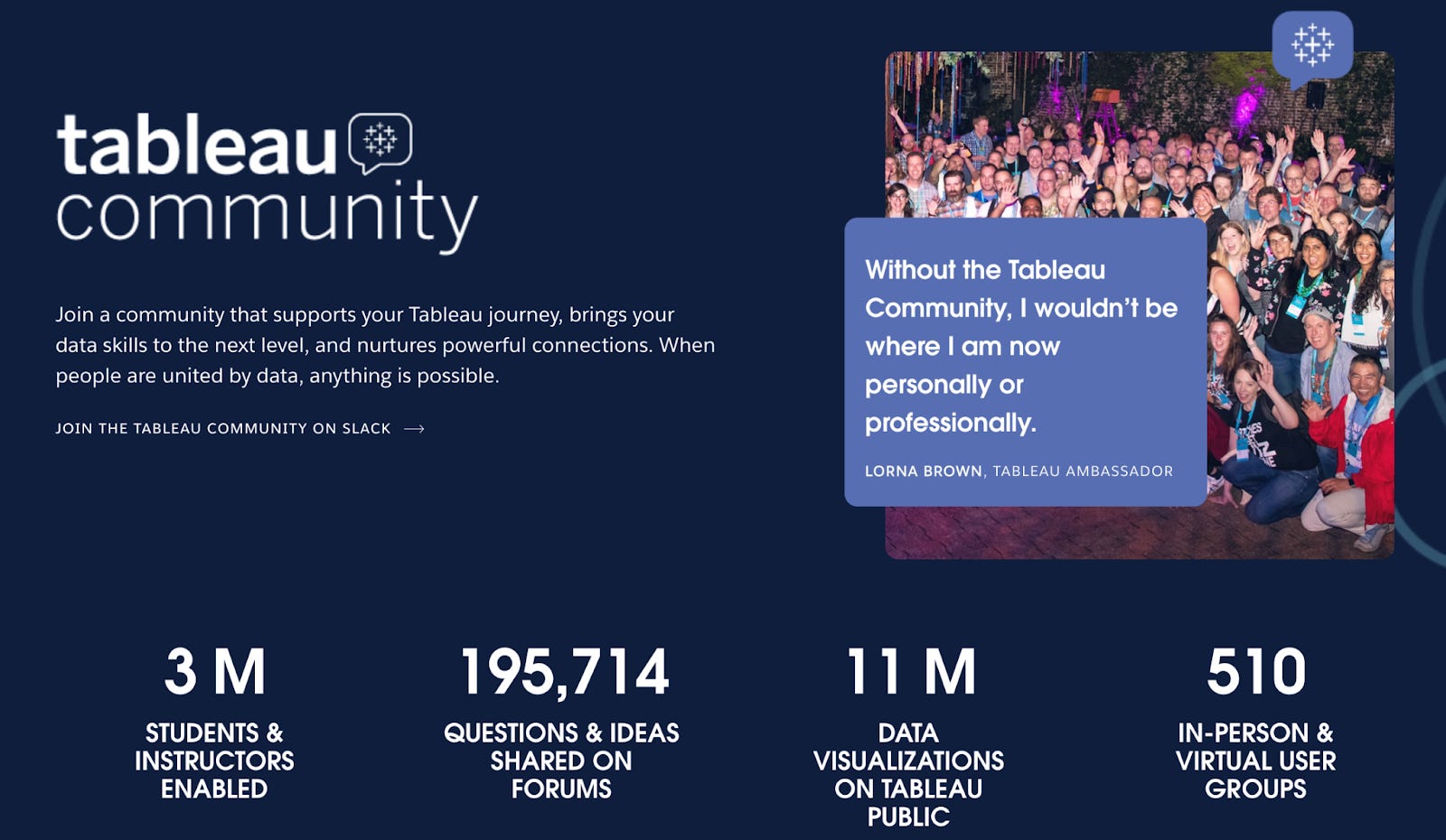
If you missed Tableau 2025 in San Diego last month, the recap is here.
Data Council 2025
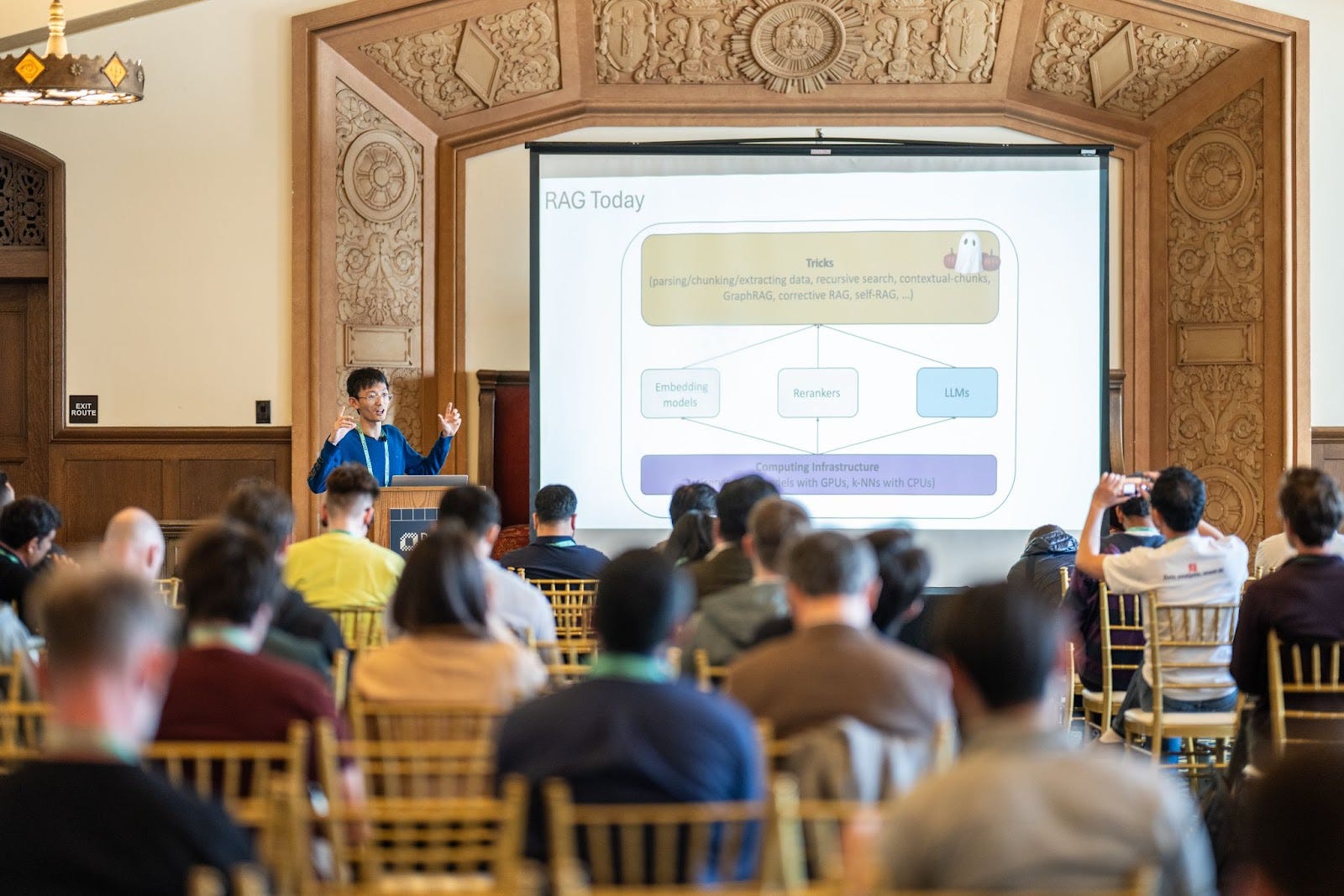
It was nice to run into my teammates, former coworkers, fellow bloggers, and friends. Funny how we all know each other - and how small the big data world really is. I should probably share a full recap soon, as many of the sessions were interesting and thought-provoking.
For now, I want to highlight that Data Council is one of the few events that brings you as close to the industry as possible:
A good mix of vendors and practitioners.
Honest talks: what works and what doesn’t.
High-caliber speakers and sessions.
While the main theme centered on the AI stack and data infrastructure, I absolutely loved the Data Science and Algos track with sessions on data layers, experimentation, causal inference, metric layers, and more.
Slides and recordings will be posted soon - keep an eye on the Data Council YouTube channel.
Enterprise AI: A Conversation with Informatica’s CEO
Last week, I had a chance to meet and interview Amit Walia, Informatica's CEO. We discussed the enterprise AI journey and the real blockers companies face when adopting AI.
Informatica launched CLAIRE GPT, their copilot:
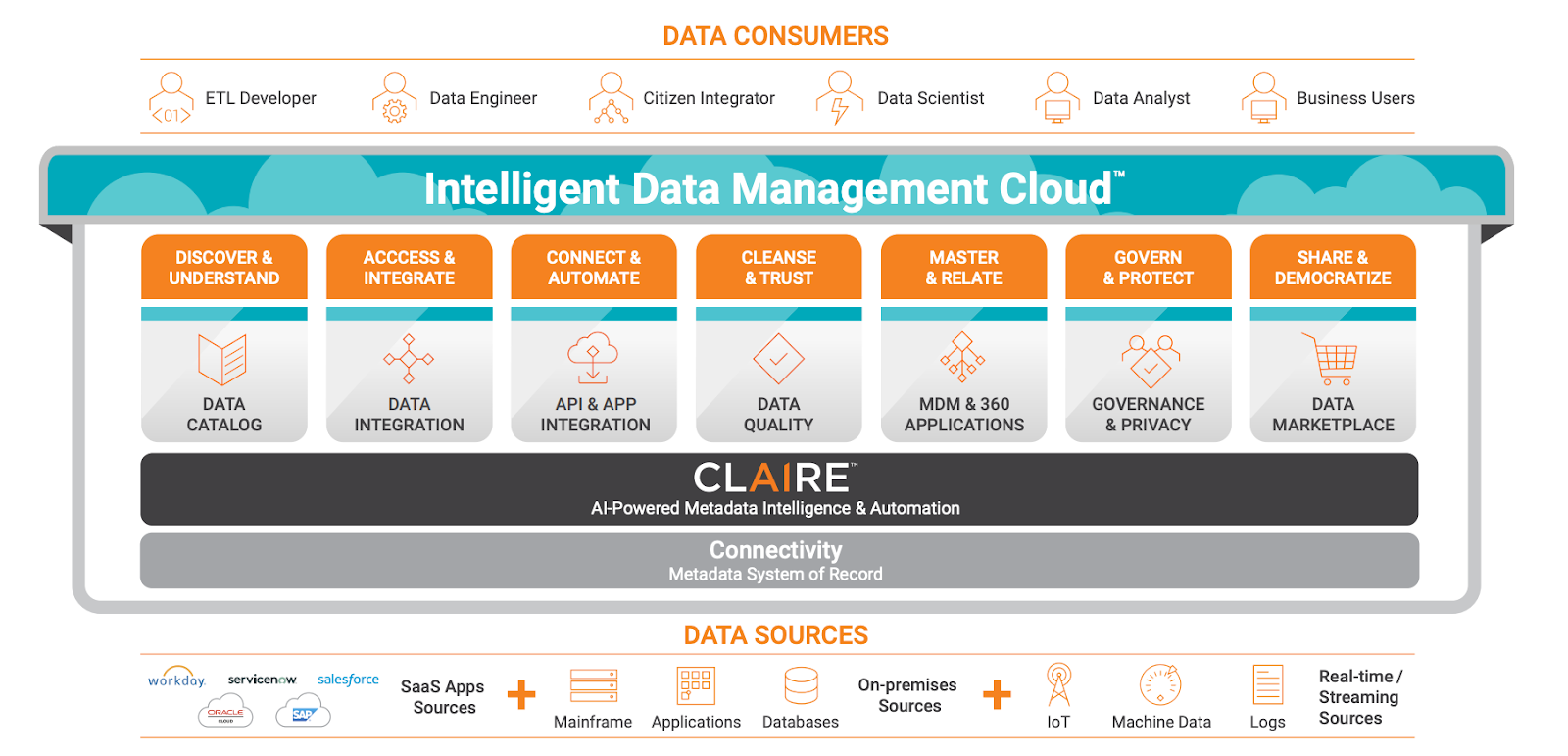
The team's focus is on helping organizations prepare their data for GenAI and build GenAI applications with data stacks that work for them. I asked Amit about the biggest challenges they see in AI product adoption across their customers. The first is velocity, speed, and accuracy - which is why their team has always prioritized data governance and data quality. Beyond that, the biggest hurdle is a lack of talent.
I don’t usually cover enterprise tools in my newsletter, but the Informatica case is interesting to me. I remember using their MDM products - and I still find it hilarious that Informatica had user identity stitching nicely solved with a full 360-degree customer view figured out long before Customer Data Platforms became a thing. I can’t speak to the complexity of their integrations or licensing, but when it comes to data products and data quality management, Informatica has often been a few steps ahead and innovating.
🔥 Last month’s highlights
Coalesce acquires CastorDoc and introduces Coalesce Catalog. Castor is (was) a known data catalog aimed at improving data governance.
Introducing Oxy - AI Agents for Data Analytics, co-founded by Joseph Moon and Robert Yi (who previously co-founded Hyperquery notebook).
Omni raises $69M to outdo Looker and Tableau. Godspeed.
Kaggle + Wikipedia: Last week, Kaggle announced a new collaboration with Wikimedia Foundation, the nonprofit behind Wikipedia. If you use Kaggle, you can now discover the new Wikipedia datasets and analyze them in Kaggle notebooks.
📈 New industry reports and benchmarks
AI Index 2025: State of AI in 10 Charts from Stanford.
State of Subscription Apps 2025 from RevenueCat.
2025 Mobile Gaming Apps Report from Liftoff.
2025 State of Mobile Gaming from Moloko (a compilation of AppsFlyer, SensorTower, and Statista).
⚙️Know your craft
Top 5 Dashboard fails (and how to fix them) from Metabase.
Data Governance at Scale - Tracking Taxonomy Woes from Amplitude.
Experimentation Program ROI calculator - credit to Juan Cruz Giusto.
Analyzing logs takes less and less custom code nowadays from Counting Stuff.
Using Causal Inference for Measuring Marketing Impact from the BBC Studios Data team.
Anomaly Detection in Time Series Using Statistical Analysis from Booking.com
Monte Carlo Crash Course on probabilities and sampling, designed by Max Slater.
Big Book of R - Your last-ever bookmark on R.
🤓 Analysis and case studies
📗 New books
The Little Book of Data by Justin Evans
“Data is not about number crunching. It’s about ideas. And when used properly (read: ethically), it is the problem solver of our time”.
PROVE IT OR LOSE IT by Rommil Santiago
A guide on how to survive the politics of launching an experimentation program. Thank you, Rommil.
✈️ Upcoming events in May
May 5-9, Anaheim: Data Governance & Information Quality Conference
May 7-8, Stockholm + online: Data Innovation Summit
May 9, Zürich: Women In Data Science Conference
May 13-15, Las Vegas: Informatica World
May 13-15, Orlando: Qlik Connect
May 13-15, Boston + online: ODSC East 2025
May 14, Virtual: Real-Time Analytics Summit
May 14-15, Boston: Data Summit 2025
May 15, NY: DSS NYC
May 20, San Francisco: DataConnect West
May 20-22, Las Vegas: Mobile Apps Unlocked 2025
May 21-23, Amsterdam: World Data Summit
Thanks for reading, everyone!
Olga, if the necessary skills aren’t being taught in academia and most companies aren’t open to providing on-the-job training for the wide range of skills now required, what do you suggest for people trying to break into data? Or are you pointing out an issue that you’re also unsure how to solve, and that may only get worse over time?