
A New Chapter for Mixpanel: My Conversation with CEO Jen Taylor
She shares her values, strategy, and how AI can turn analytics from reactive to proactive.

Welcome to the Data Analysis Journal, a weekly newsletter about data science and analytics.
A few weeks ago, the analytics world got big news: Mixpanel appointed Jen Taylor as its new CEO, succeeding Amir Movafaghi.
For anyone working with user interaction data, Mixpanel needs no introduction. It’s one of the most established analytics tools, used by more than 29,000 companies worldwide, and has had a huge impact on product and marketing analytics.
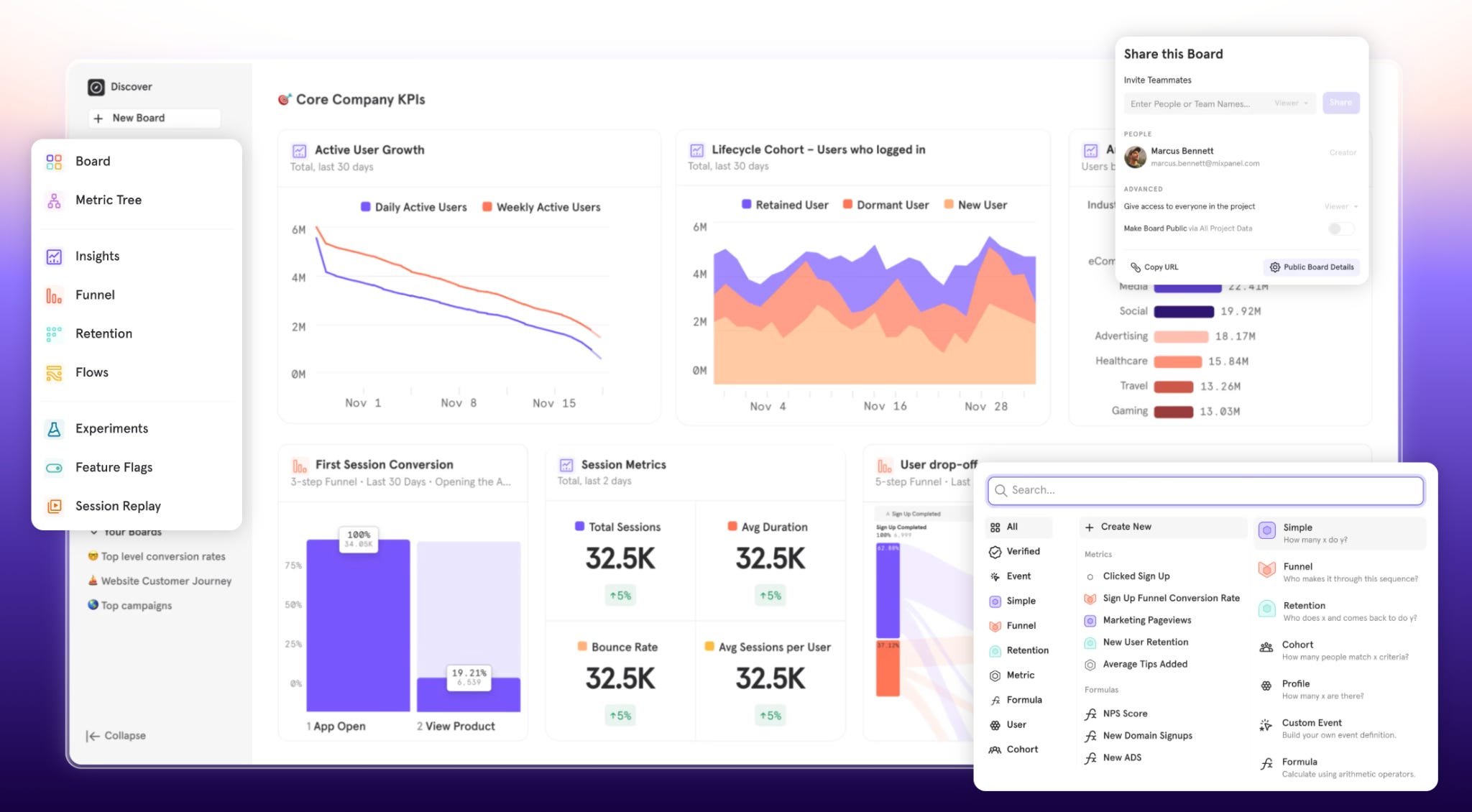
I’ve been using Mixpanel since 2012, and it’s shaped the way I work as an analyst. I still use it a lot today, following its features, updates, and announcements closely. So when I heard Jen was stepping in as CEO, I wanted to understand what this means for Mixpanel, its users, its competitors, and the analytics space overall.
Two weeks ago, I had the chance to meet Jen for a candid conversation about the state of product and marketing analytics, how AI is reshaping the field, and how Mixpanel is positioning itself to embrace this change and drive growth.
Jen Taylor served as President at Plaid and Chief Product Officer at Cloudflare, where she helped grow the company from $100 million to $1 billion. Before that, she led product and data initiatives at Salesforce, Facebook, and Adobe. Now she is joining Mixpanel, and I’m (selfishly) hoping we’ll see more new features, more success stories, and innovation that accelerates analytics without compromising trust or accuracy.
Today, I’m excited to share my interview with Jen, along with her perspective, values, and vision for how Mixpanel will lead and transform analytics.

What are the next steps for you and for Mixpanel?
Part of what drew me to Mixpanel is my long-standing passion for understanding customers and users. I’ve spent most of my career as a product manager, and my true north has always been the customer. Tools like Mixpanel have been transformational for me because they allow you to marry quantitative behavior with qualitative insights in a way that gives a much deeper understanding of the user.
Right now, I see 2 forces that are especially transformational:
The market is shifting away from looking at product analytics in a silo.
With advances in data warehousing and infrastructure, we can now combine product analytics with other data sources across the business. That means getting a more complete picture of the customer and driving value not just for product teams, but also for business and financial stakeholders. Mixpanel has a huge opportunity to accelerate that shift.
We’re in a moment where AI can fundamentally change how analytics work.
For Mixpanel, AI can make implementation easier, strengthen data governance, and speed up how people turn questions into dashboards. More importantly, it can shift analytics from reactive, where users pull insights, to proactive, where the system surfaces insights, suggestions, and areas to focus on.
For me, the exciting part is listening to customers and working with the team to figure out where those changes create the biggest opportunities or challenges, and how we can refine our strategy to meet those needs.
Amplitude just launched AI Agents. Is Mixpanel planning to launch similar AI features?
Do customers even ask for it?
Mixpanel has been working with machine learning and AI for some time now. Over a year ago, we launched Spark AI (Ask Spark AI), and more recently, we’ve released a set of new technologies that are still in beta as we continue exploring how to integrate AI throughout the platform.
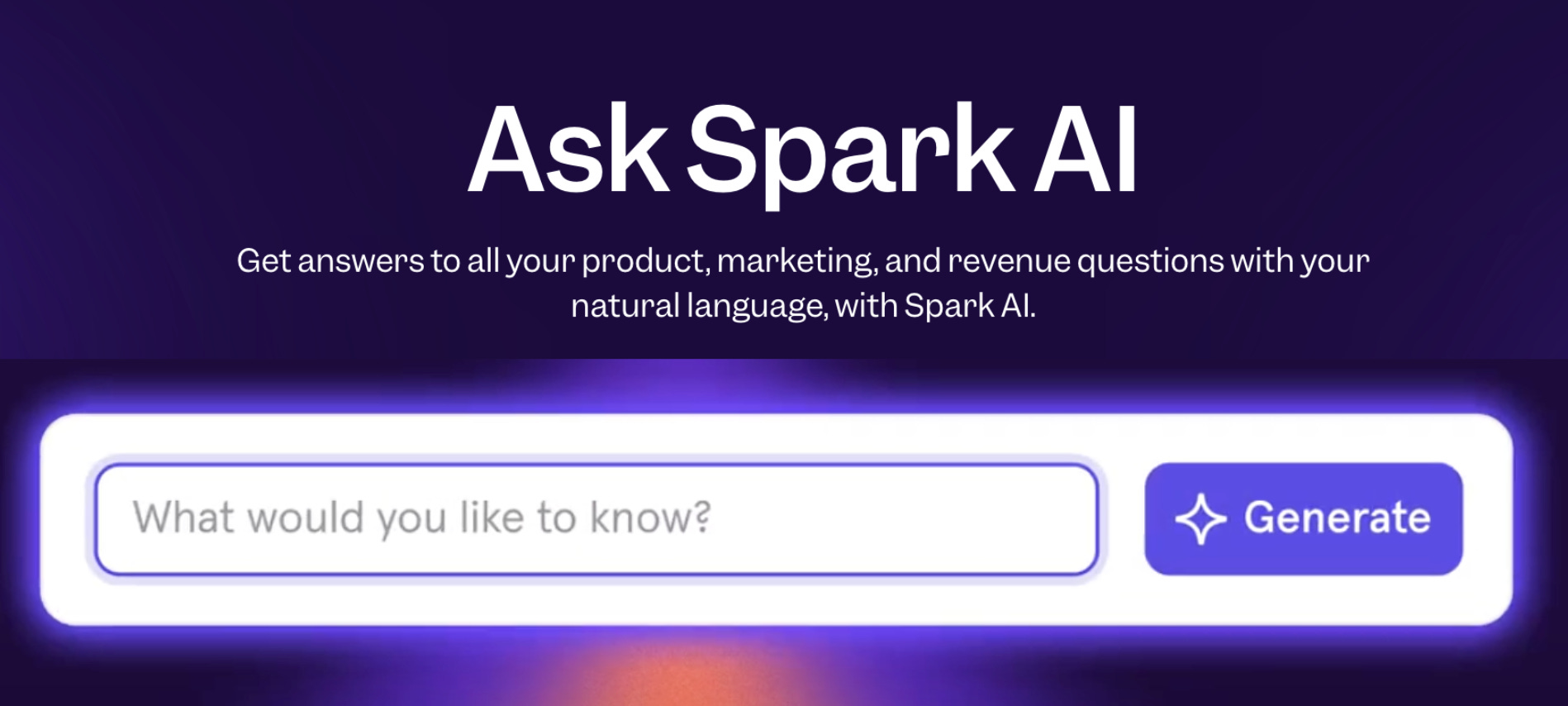
I see our role in AI in 2 main ways - applying AI to the real problems we hear from our customers and see in the market, and then it’s about helping our customers learn, adopt, and get value from AI.
AI is incredibly powerful, but it takes time to understand and even more time to build trust in the results. Part of our journey at Mixpanel is to meet customers where they are today and support them as they grow with these technologies.
What is your long-term vision for Mixpanel? How are you thinking of differentiating from other digital analytics tools?
I absolutely see us continuing to refine and define who we are, and that will be based on how we understand the opportunities and needs of our customers, and how we position ourselves within the broader ecosystem of tools and solutions they use.
Most of our customers work in heterogeneous environments - using Mixpanel alongside other data platforms, financial systems, and more. The question for us is: how do we fit within that ecosystem, and how can we serve as a multiplier for our customers and their products?
One of the things that drew me to Mixpanel is its continuous focus, since day one, on democratizing action and insight. As a product manager, I’ve seen how much organizations aspire to that, but also how hard it is to achieve. Given the technical moment we’re in now, I believe Mixpanel is uniquely positioned to lean into it as a real differentiator.
The team has been cranking out innovation, expanding into session replay, experimentation, and more. Just before I joined, we launched metric trees. We’re constantly working with our users to understand their needs and how we can broaden the capabilities that help them better understand how people are using their products.
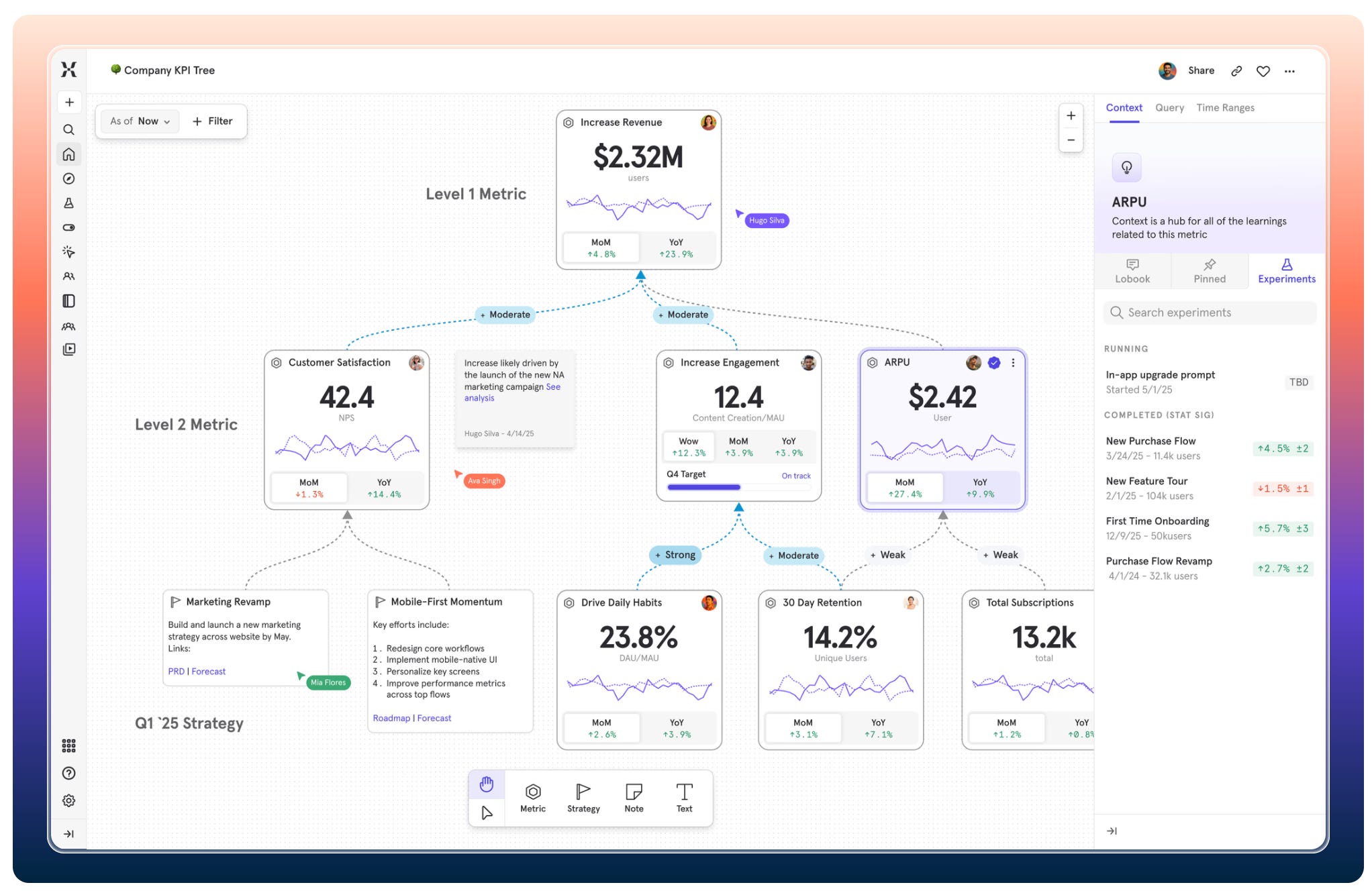
Mixpanel has many new great features! Even as a power user, I haven’t had the chance to try some.
That’s a classic software conundrum: people get to know a product at a certain point in time, and then the challenge becomes - how do you help them discover and use new capabilities?
They tend to stick with what they already know. Our job is to keep evolving and improving the features they use today, while also introducing new ones that could be incredibly valuable to them.
Are you thinking about expanding the team, maybe even setting up more headquarters in different regions for Mixpanel?
Right now, I’m in listen-and-learn mode. I’m getting to know the team and our customers. Our strategy around locations and the markets we serve will be completely driven by where we see demand and where we find talent.
One of the things I really enjoy about Mixpanel is that it’s a truly global organization, with offices in San Francisco, London, Barcelona, Bangalore, and Singapore. Our customers are all around the world. That global reach is both important and impactful. I also believe that the diversity of experience is critical.
What values do you want to bring to your team at Mixpanel?
A big part of what helped me through the decision-making process to join Mixpanel was feeling that the culture and values of the company were very aligned with who I am and how I lead. That gave me confidence that I could come in as a new leader, listen and learn, and work within a culture that’s already incredibly successful, while also thinking about how we can continue to evolve and grow together.
The collaboration, teamwork, integrity, and empathy I see within the organization are all closely aligned with how I lead. And, of course, there’s the strong focus on customer centricity.
Thank you, Jen!
Closing remark:
Certainly, I’m impressed with Jen’s experience and her openness to feedback. We also discussed some of Mixpanel’s features and analytic challenges, such as maintaining and enforcing taxonomies or metric trees, and I can tell Jen feels the product and knows the space very well.
The biggest value analytics tools can offer is recognizing your product’s unique structure and value proposition, and then tailoring the analytics experience to fit your specific footprint. The challenge is how to make general frameworks work for a particular product. How to adapt copy-paste templates to your own data. That’s hard to do.
This is where AI can make a real difference - by recognizing your event structure, data volume, organization structure, and product type, then guiding you through analytics implementation and consumption, helping you take full advantage of the features and frameworks available today.
Would love to see Mixpanel manifesting it.