Omni: The Better Looker, or Just Another Expensive BI Tool? - Issue 319
A deep dive into Omni’s semantic layer, BI-as-code workflow, customer feedback, AI features, and where the tool still falls short.

Today, I am back on my quest to find the one and perfect BI tool we need.
Last year, I published a guide comparing Tableau vs. Power BI. As I said then, I find both tools overly complex and very expensive - neither would be my choice. That post sparked discussions, with people asking: if not Tableau or Power BI, then what?
Well, there are now more than 200 active BI tools on the market now. More than half emerged after the AI boom, and most of them look like this:

I tested about 8 of these tools (the ones that offer free trial) using my medium-sophisticated dataset and a few questions beyond the usual “How many transactions did we receive in Canada this year?” None of them met the bar. Not even half of it. The visualization quality is a horror story for another time. Most of these tools are simply LLM-to-SQL wrappers, not LLM-to-semantics. They become useless once you move beyond trivial “how much” or “where” questions.
I do not consider these post-AI analytics tools to be BI. So my “best BI” list still focuses on more foundational drag-and-drop, dashboard-building tools like Looker, Domo, Tableau, Power BI, Sigma and others. That is the category I use to evaluate Omni. Not the new wave of ask-anything-and-get-a-pile-of-stats-in-seconds.
Omni has been on my review list for a long time. One of my clients is an Omni customer, so I use it myself. But I am not a typical user. I am comfortable with most BI tools, and my learning curve is usually short (unless it’s figuring out aliases in Tableau. It’s been 12 years... please send help). That is why I also interviewed 11 active Omni customers and spoke with 14 Omni users who either build or read reports. I researched setup and maintenance costs, compared notes across teams, and built a good view of how Omni stacks up against other BI tools in 2026.
Below is everything you need to know about one of (still) new, fast-growing, and most talked-about BI tools this year: a deep dive into Omni’s features, where it performs best, where it falls short, and when it makes sense to use it to justify the cost. And, most importantly, whether Omni lives up to its promise of becoming the best BI tool.

How it all started
I think the way a product enters the market matters. And personally, I did not find the “We built Looker, so we can do it again” story very appealing. But that was enough to raise a $9M+ seed round.
My first introduction to Omni was in late 2023, when Jamie Davidson reached out and positioned Omni as an upgraded version of Looker. So I knew a new BI tool was coming. But the positioning did not appeal to me at first. There was no clear “we do this one thing better than anyone else.” The message was mostly “we are better than Looker.” So what? Lots of tools are.
Shortly after that, I was part of a large migration from Looker to Omni. The data stores were a mess, the semantics were fairly complex, and the migration took about 6 months. That was my first time working with Omni - and it was surprisingly smooth. Their team was involved every step of the way. Their approach to data layering, semantics, and scale was very solid. I could see back then that this team was thinking big.
Long story short, and one acquisition later, Omni now has more than 200 customers and recently raised a massive $120 million Series C at a $1.5 billion valuation!
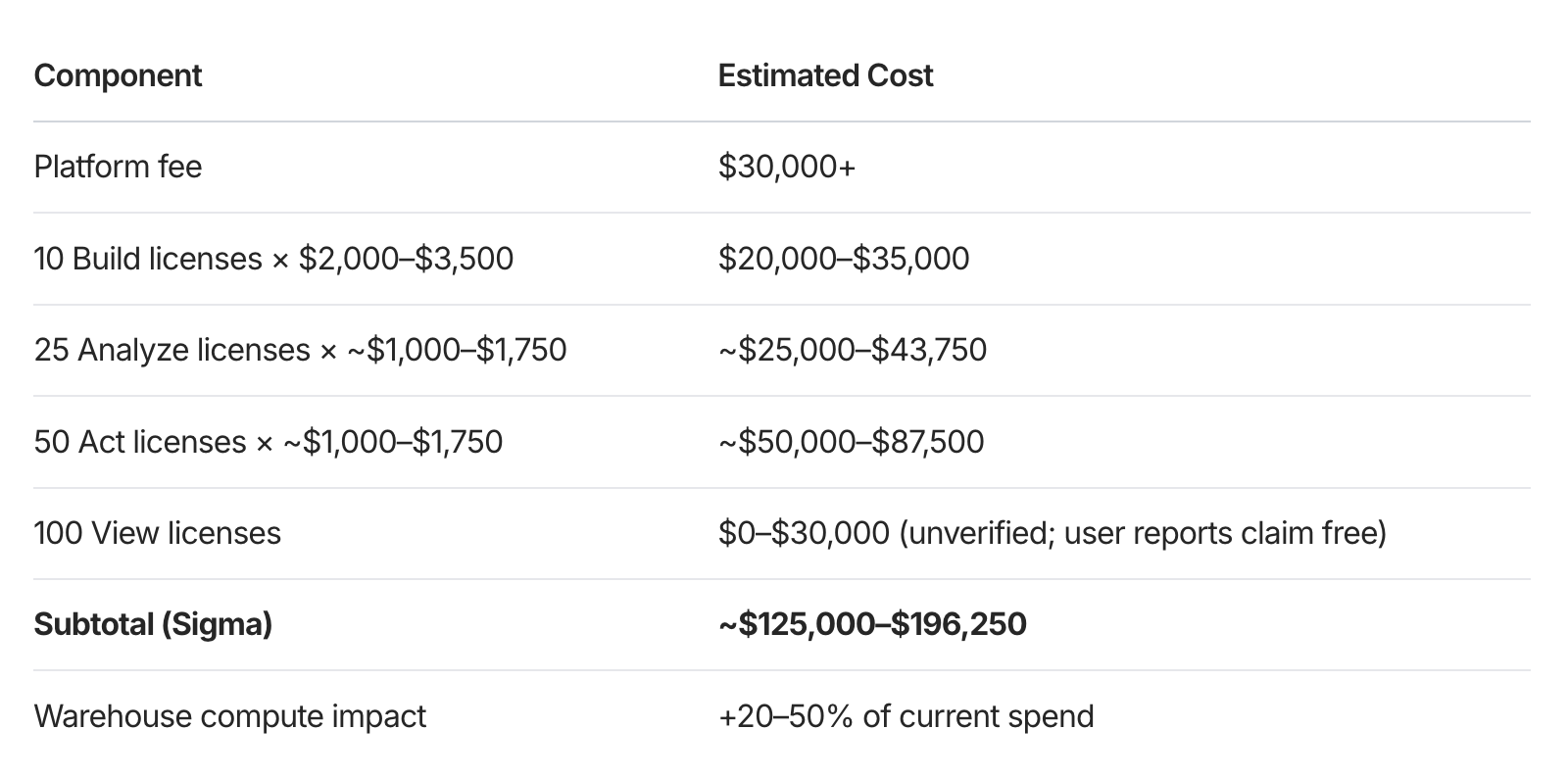
If that sounds high, compare it with Sigma’s $3B and Tableau’s $15B valuation. That is high. Especially Sigma. Why would someone pay $125K a year for what is basically a spreadsheet?
But back to Omni. With this level of funding, Omni is clearly moving toward the enterprise market and is going after Looker, Tableau, Sigma customers to set itself as the best and most matured BI tool out there.
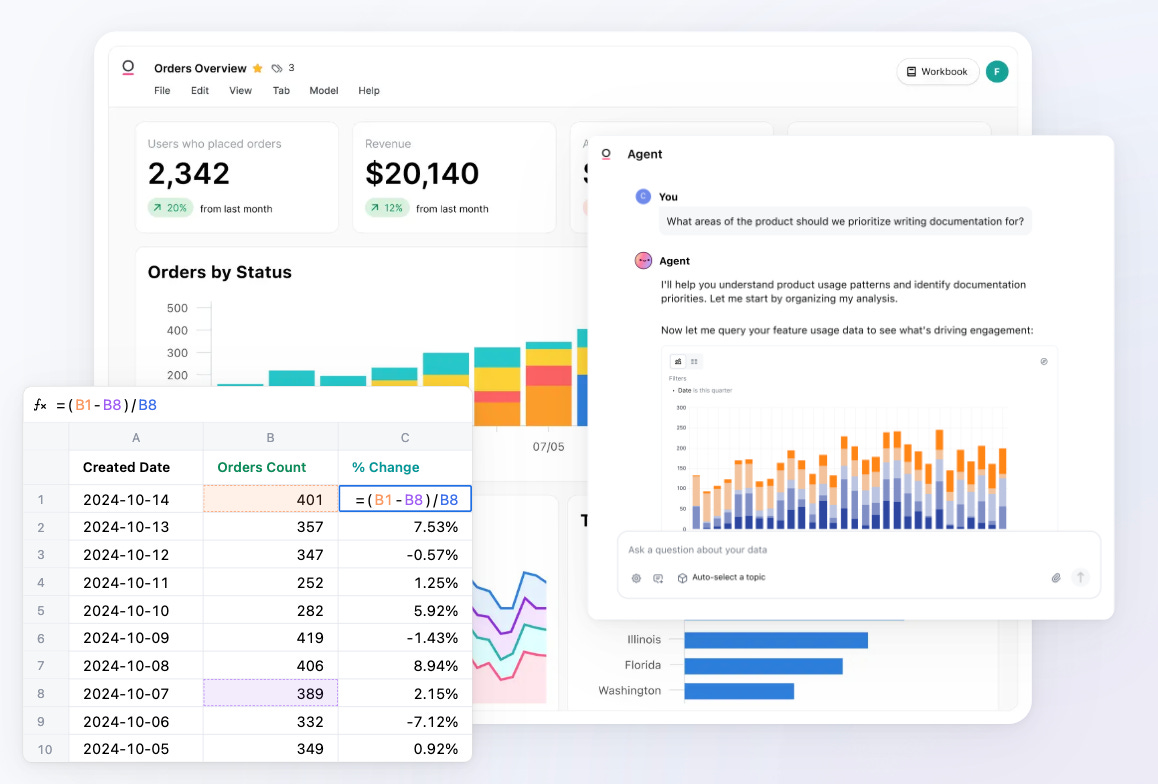
But is it though? Or is it just another very well-funded BI company with a better origin story?
What Omni gets right - and where it falls short