
Figuring Out Chaos. Now What? - Issue 318
May recap: How teams are trying to make decisions when the old playbook no longer works

Welcome to the Data Analysis Journal - a weekly newsletter on data science and analytics.
If you missed the May posts, here’s the roundup:
How Asana Found $40M in Recoverable Revenue - How product analytics at Asana turned false churn from user removals into a $40M product decision. Guest post by Kuber Jain.
When AI Agents Become Users: Rethinking Analytics Tracking - How to set up analytics for AI agents: tracking conversations, testing prompts, and optimizing products in real time.
10 Data Concepts Analysts Use Every Day - Part 2 - another batch of 10 concepts every analyst should know. The first 10 are here.
Hello from Snowflake Summit. If you’re here, I’d be happy to meet. If not, I hope to see some of you next week at Databricks.
May was a busy month for data and analytics. Between conferences, product launches, announcements, and industry events, there was a lot to follow. In May alone, I had 21 events on my calendar, so this recap is a bit longer and more opinionated than usual.
I’ll cover highlights from Mixpanel MXP 2026, Mobile Apps Unlocked (known as MAU), and the Informatica Summit. I’ll also share the key updates from last month across data science and analytics, including new case studies, product announcements, and tools shaping the field, so you can stay reasonably informed without pretending you read every launch blog.

🔊 Advocating for analytics: The new normal and how to figure it out
Mixpanel is ready for the next chapter
I wanted to share a few thoughts on Mixpanel’s “new life.” I call it that because Mixpanel has a new CEO, recent acquisitions, a new strategic direction, and a product that has been changing quickly. I have been using Mixpanel for more than 14 years now! Even though I probably mention Amplitude more often (mostly because Amplitude has been more vocal), I am a more confident Mixpanel user. And with its recent AI direction, Mixpanel currently feels ahead in agent-native analytics.
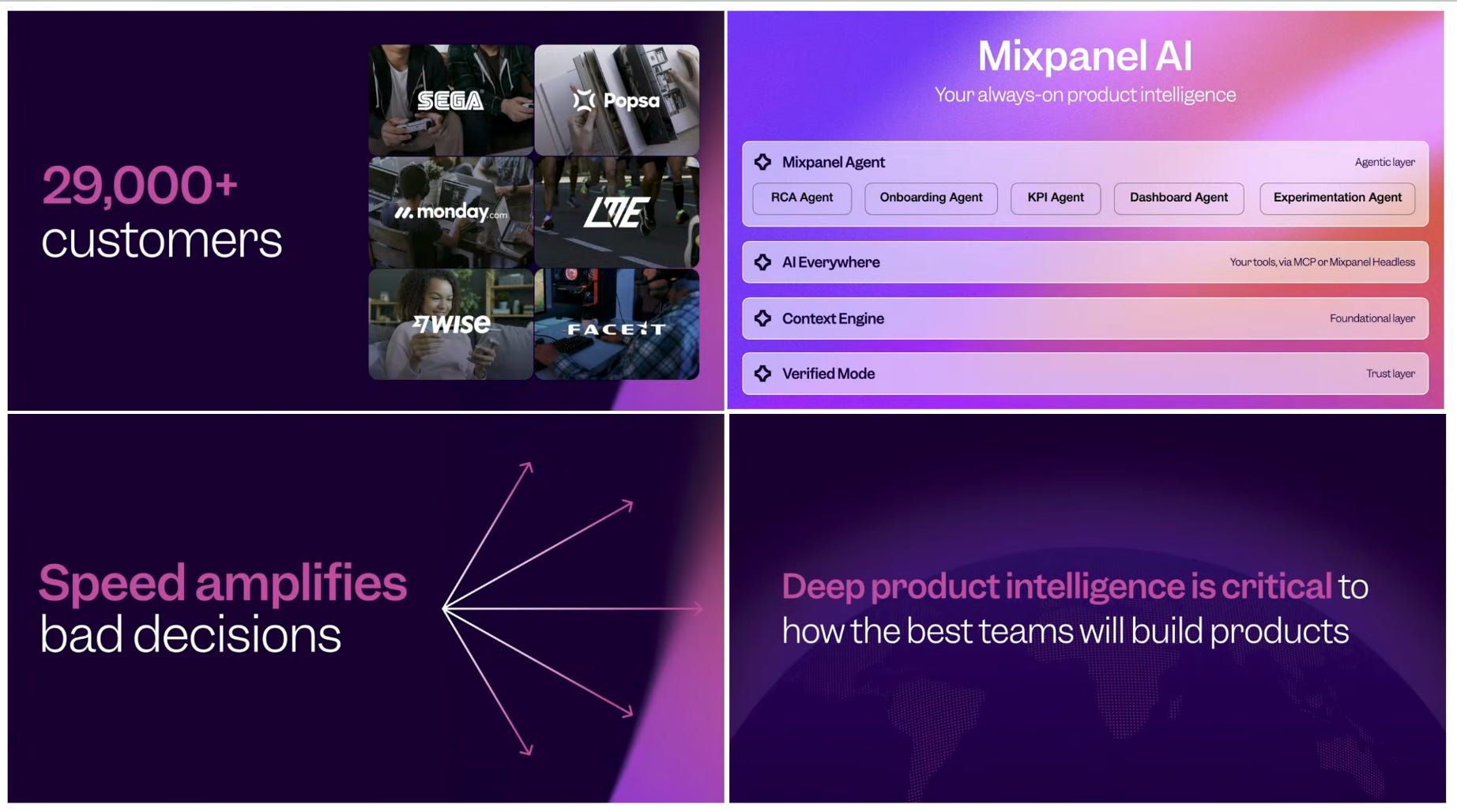
Overall, MXP 2026 felt like a success. I’ll cover some of the sessions in more depth soon, but here are my main takeaways:
Companies have shifted from the mobile era into the AI era, and analytics has to adapt. It starts with how we set up taxonomies, catalogs, and events - all need to become native to agents and code, not just to analysts and product managers as before.
Today, prototyping, development, testing, and design are all moving faster than ever. But speed amplifies bad decisions. Existing product models are collapsing, and we need new frameworks that no one has fully figured out yet. But what we do know is that deep product intelligence is becoming non-negotiable for growth and scale, and that is what teams should invest in. (I really liked how Mixpanel summarized my 318 publications into one sentence).
Mixpanel is positioning itself as a data layer that teams can build on. It helps separate signal from noise, create a clearer understanding, and compound organizational knowledge. In other words: it wants to become your personal product analyst. Godspeed.
Overall, I agree with Mixpanel’s stance and vision, even if the ambition is high. I also really like Jen Taylor. Her energy is impressive, and given the recent announcements and acquisitions, I think Mixpanel is making the right moves.
It was also nice running into Daniel Schmidt, co-founder of DoubleLoop, the metric trees product acquired by Mixpanel. We may disagree on how practical metric trees are, but I still think they are a unique and smart addition to Mixpanel’s product.
What happened to Mobile Apps Summit?
Mobile Apps Unlocked (MAU) used to be one of the most important events for mobile app growth, AdTech, and MarTech. This year, though, it didn’t feel as strong. I was already disappointed by the event last year, and this year felt even weaker.
This is supposed to be the largest mobile app AdTech and MarTech conference, with more than 2,000 apps attending, at least as claimed. But the quality of the content (and speakers) felt very low.
The exhibition hall was full of marketing and advertising vendors, but the event lacked real-life examples of how these tools and strategies actually work: implementation costs, pitfalls, success stories, and measurable outcomes. Where are the success stories?
For example, I was hoping to learn how web-to-app performs for apps, but why is no one sharing any data on this? I know FunnelFox says it works, but why can’t anyone prove it? I don’t think the math for web-to-app works. I suspect the platform friction plays a bigger role, and I don’t believe the ROI that they claim. I would love for someone to prove me wrong and lay out the math on how investment in web-to-app makes sense. I don’t think it does.
This year, as with last year, there were no strong case studies from app founders or practitioners. There were no real discoveries or lessons backed by data points or benchmarks. I don’t trust broad Phil’s claims like “we’re seeing this everywhere” or Vahe’s “I helped apps generate $50M in incremental revenue through paywall testing” without seeing the data behind them. Almost every speaker seemed to be either from an agency or representing a tool.
To be clear, this is not the case with every event. I always enjoy RevenueCat’s events. For example, Ladder shared its entire product and marketing strategy on stage last year, or how Yu-kai Chou presented a practical framework for gamification (which we actually implemented at MyFitnessPal, and it worked), or how Flo shared their retention framework at the recent Adjust event. I wish MAU were that kind of place where we could upskill, compare data, and share learnings, instead of being an overwhelming platform for promotion. I suspect that after this publication, I may be banned from MAU next year, haha.
Context is a new currency
I didn’t have high expectations going into an enterprise data and AI conference in Vegas. To my surprise, Informatica World 2026 was more practical and on point than any other data event I’ve attended this year (including Snowflake Summit, where I am now).
This was my first Salesforce event (Salesforce acquired Informatica last year), and I was impressed by the scale, organization, and content.
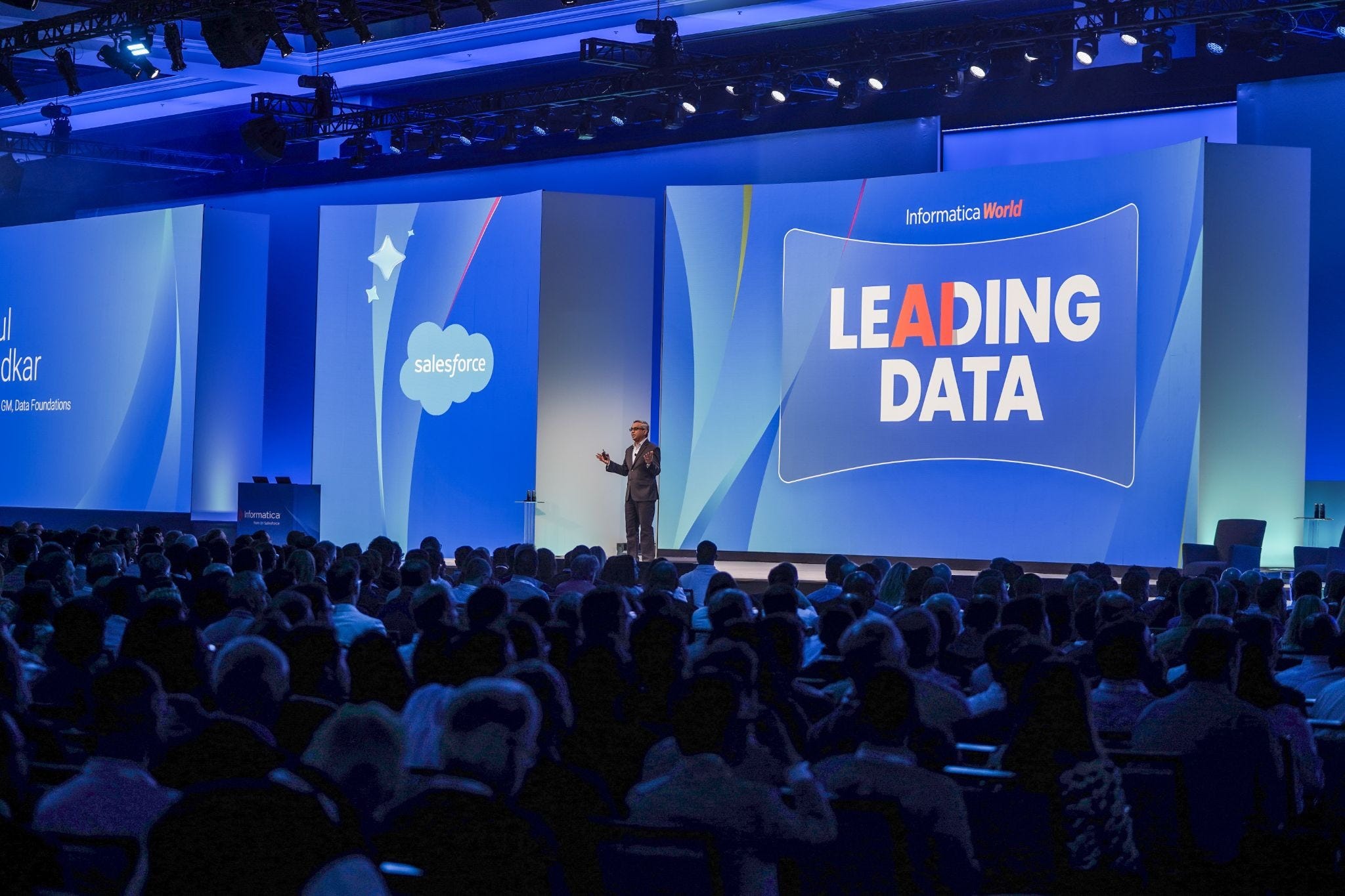
It almost felt like the speakers had read my Before You Build an Analytics Agent publication and decided to dedicate the entire conference to it, with a focus on the importance of context, semantics, data quality, and governance.
I liked how transparent conversations felt - as AI agents become more common, data without context is not enough. Speakers framed context as the new currency of data. It’s the combination of metadata, governance, lineage, quality, and business meaning that allows AI systems to understand and act on data. Informatica positioned itself and its products as the foundation for trusted data, automated governance, and data engineering.
The team announced Headless Data Management, where metadata, quality, governance, MDM, lineage, and policy enforcement are treated as services that AI agents can call directly through MCP and their CLAIRE Agent. They launched Agentic Multidomain MDM - a way to apply agents to the manual work of data cleaning and enriching.
I learned that PepsiCo already has more than 1,500 agents supporting internal systems, Hearst emphasized the growing risks around data leaks and poorly grounded outputs, and Google Cloud highlighted the move from reporting to autonomous agents that can reason and act.
The next phase of data management is the context layer that makes data trusted, usable, and safe for AI. This is where all our attention and investment should be, and I can’t agree more.
🔥 May highlights
Statsig joined OpenAI. No, wait - Statsig joined Amplitude!
There has been some confusion around what happened to Statsig. Initially, OpenAI acquired Statsig in a $1.1B all-stock deal. But now, Amplitude announced a “strategic partnership with Statsig”, under which the Statsig brand, platform, and customers are going to Amplitude. That makes the deal feel like a split between talent and platform. OpenAI wanted the people and experimentation expertise. Amplitude needed the experimentation platform.
My favorite analyst is celebrating 20 years of blogging!
Avinash Kaushik’s Occam’s Razor just turned 20. If you’re a marketing analyst (or really any kind of analyst), reading Occam’s Razor is a must. Avinash started the blog back in 2006, and it has been one of the most practical and influential analytics blogs ever since. I’ve been a subscriber for more than 10 years now, and it shaped the kind of analyst I became. It is still one of the best examples of how to write about analytics in a way that is useful, clear, and grounded in real work. Highly recommend.
In other news:
Omni makes news again with acquiring Fabi.ai to make a push into headless BI, CLI-driven analytics, MCP, and AI-agent workflows.
dbt launched Core v2, which now serves as the open-source foundation of the Fusion. That does not fully end the Core vs. Fusion debate, but it means that dbt is keeping an Apache 2.0 open-source Core while Fusion will be the main product direction.
Amplitude launched llmtrack.org - a public AI-search visibility tracker. It measures how brands show up across GPT, Claude, Gemini, and Google AI Overviews “using more than 44,000 prompts across 30+ categories and 270+ brands”.
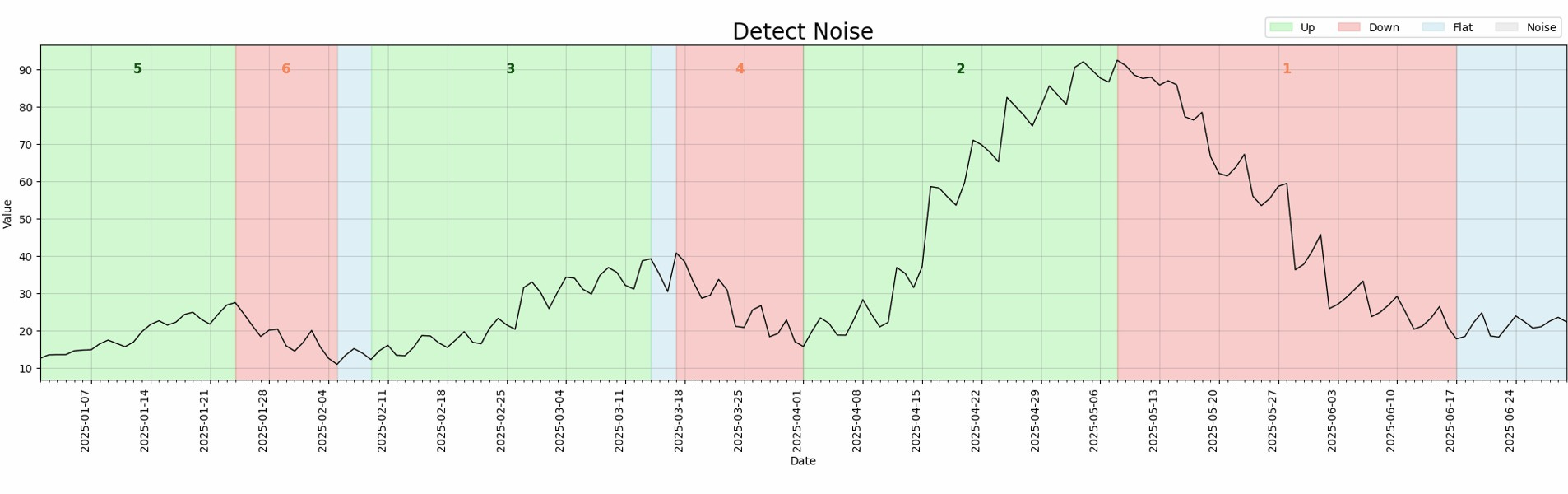
For time-series analysis, check PyTrendy - a new package for identifying and analyzing trends in time series:
📈 New industry reports and benchmarks
The State of AI in the Enterprise from Deloitte
The 2026 agentic AI readiness index from Fivertran
Crosscheck: Benchmarking AI Models in the Real World by LinkedIn Labs
🤓 Analysis and case studies
Powered ≠ Trustworthy by Johan Rydberg (Spotify/Confidence): Spotify wins 12% of experiments but learns from 64%. It’s not all about counting winners.
Causal Inference Is Different in Business by Alejandro Alvarez Perez: Not every decision deserves the same rigour. Match your causal inference to the gravity of the decision: constructive decisions need speed, final decisions need precision.
Experiment Velocity by Jakub Linowski: Jakub created this interactive simulator showing how test volume compounds into cumulative lift. More experiments mean more winners get a chance to ship.
🎓 New tutorials
❤️ Favorite publications last month
Bookmarked to re-read favorite takes
Requirements analysis: catching requirement bugs before they become code
Notes From the Field: AI, Energy Shocks & the End of the Old Playbook (Spring 2026 Edition) from Joe Reis
What data science is actually about in the age of AI from Eric Ma
✈️ Data + Analytics events in June
May 31-June 5, Bengaluru, India: SIGMOD/PODS Conference
June 1-4, San Francisco, CA: Snowflake Summit 2026
June 9, New York: Chief AI Officer NY
June 10-12, Bangkok, TH: Mixpanel MXP
June 12, London, GB: Research and Applied AI Summit
June 15-18, San Francisco: Databricks Data and AI Summit 2025
June 16-17, Sydney, Australia: Gartner Data & Analytics Summit 2026
June 16-17, London, GB: Data Science & AI Summit
23 Jun, online: Causal Summit
Also, check this calendar for the full list of data and analytics events this year: The Biggest Data, Analytics, and AI Conferences of 2026.
Thanks for reading, everyone!